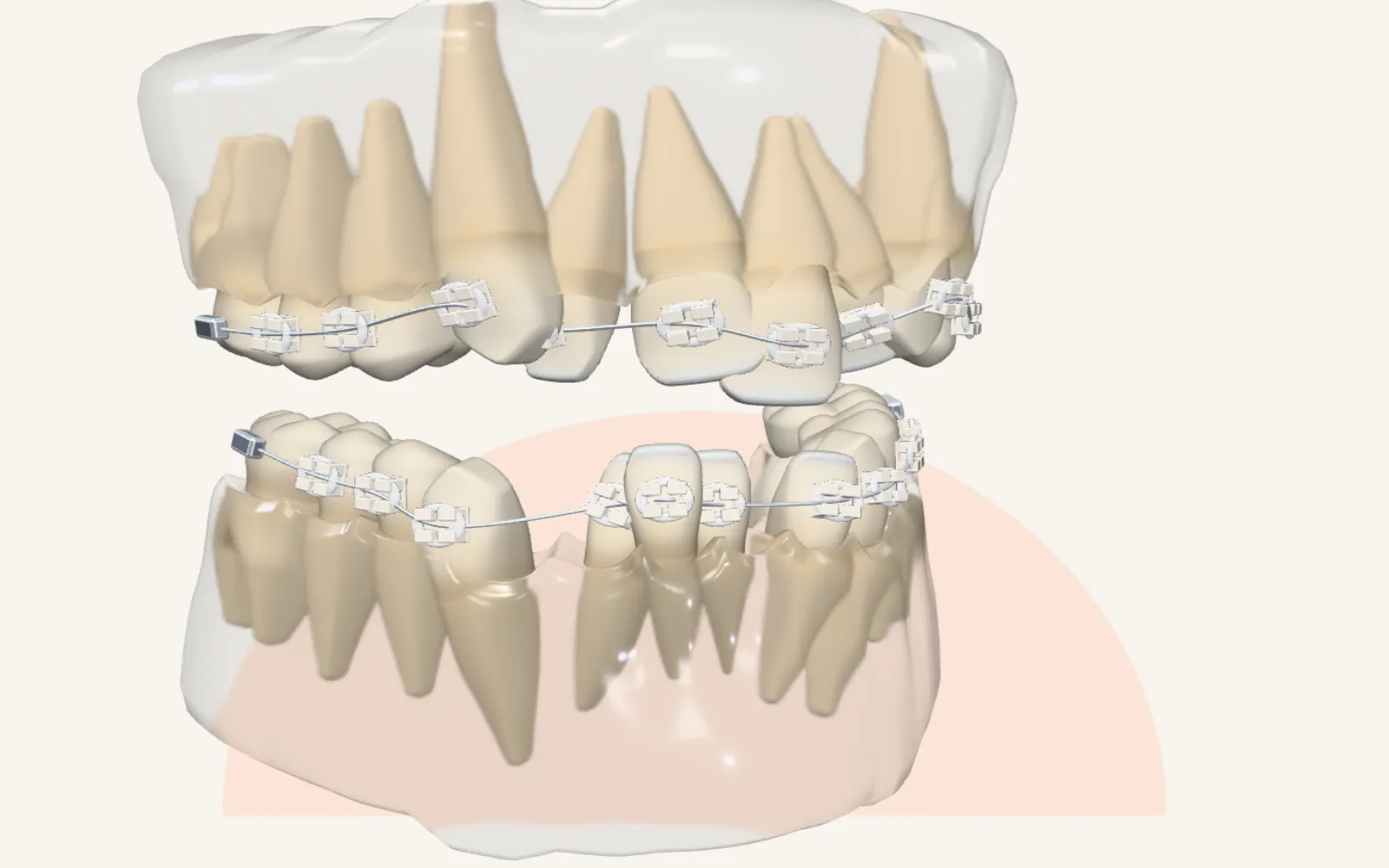
Ceramic braces work like metal braces, but the brackets are made of tooth-coloured ceramic, so they are much harder to notice when you talk and smile. Many adults choose them for work.
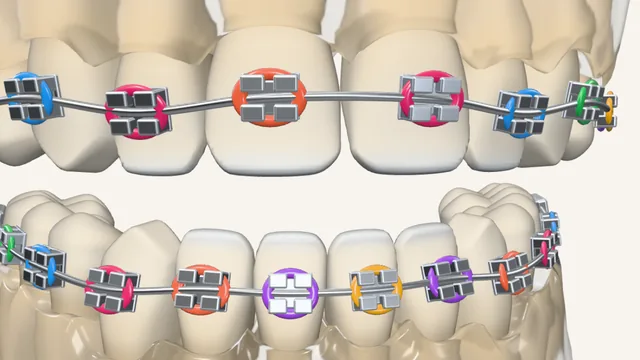
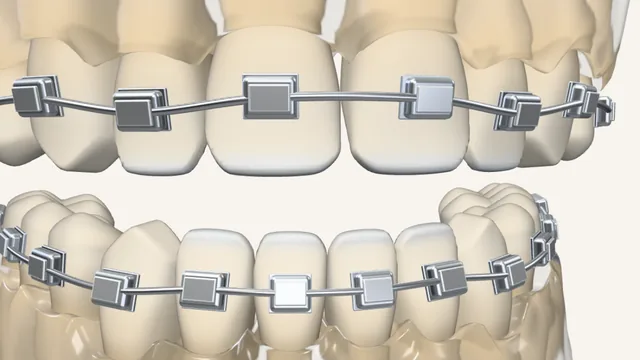
Tooth-coloured brackets are glued to your teeth and a thin wire runs through them.
Clear elastic ties hold the wire, and they are replaced at every adjustment.
Every 4 to 6 weeks you come in for an adjustment, and the wire is changed as your teeth move.
Why people choose themThey blend in with your teeth. They move teeth the same way metal braces do.
Keep in mindThe clear ties can stain from coffee, tea and curry until they are changed. The brackets are a little larger than metal ones, and they cost more.
The real case behind the animation
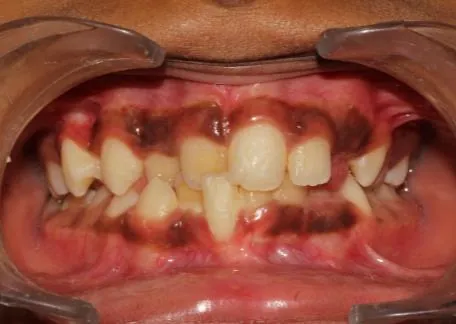
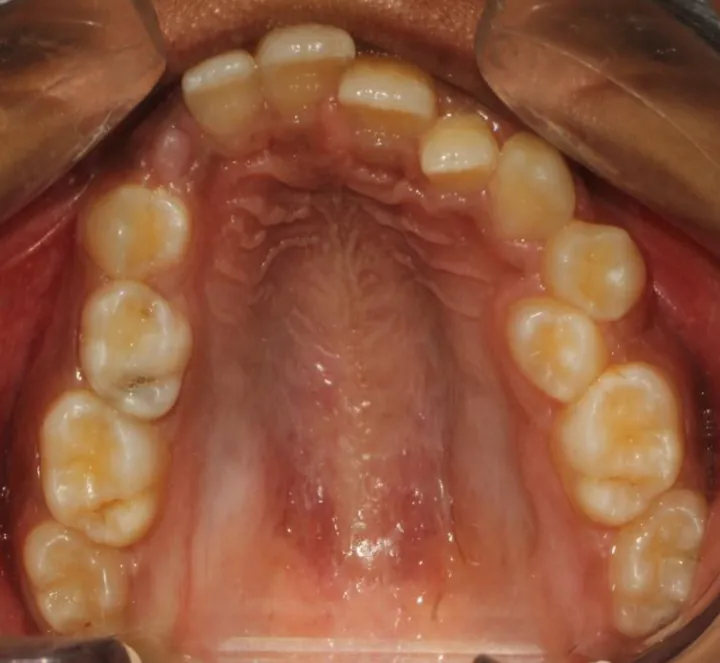
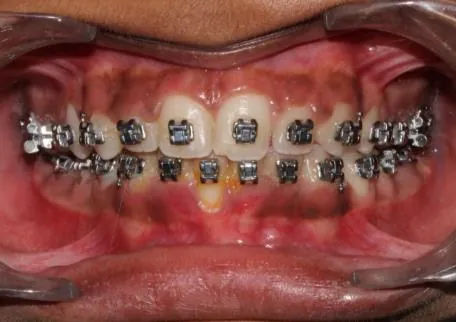
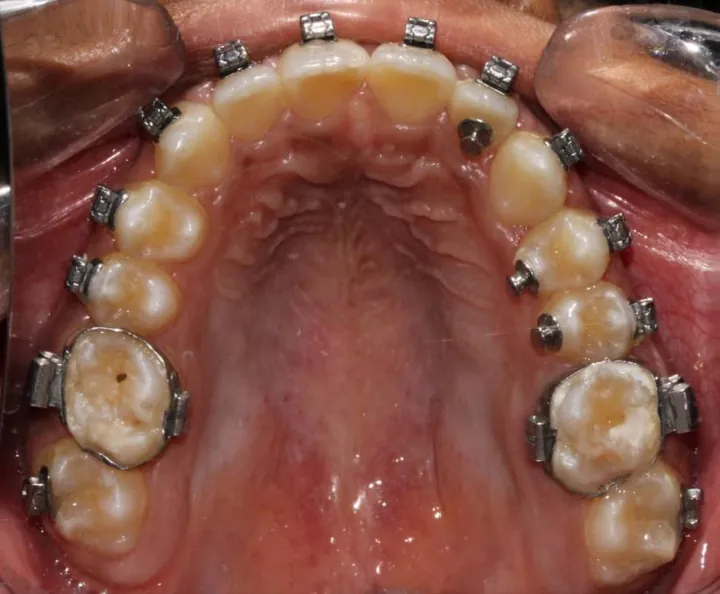
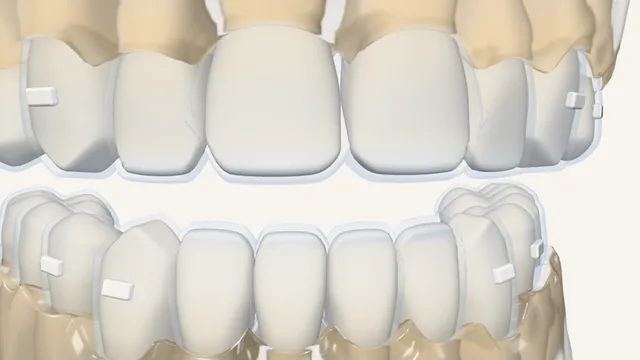
A 16-year-old came to Dr. Poojit with crooked teeth and a crossbite. It was a borderline case for removing teeth, but it was treated without extractions using Damon self-ligating braces. The 3D animation shows the same tooth movement with ceramic braces, so you can see how they look. It is an illustration, not a recording: real teeth move at their own pace, and the orthodontist plans the timing for each patient.
Case 1
Crowding and a crossbite, treated without extractions
Patient
16-year-old
Concern
Crooked teeth.
Treatment
A borderline case for extractions, treated without removing any teeth using Damon self-ligating braces.
Every mouth is different, so this case shows what was possible for this patient, not what will happen in yours. How long treatment takes and how it ends depend on your teeth, your bite and wearing your retainers afterwards. Braces and aligners also carry risks:
Soreness and pressure for a few days after fitting and after each adjustment.
Brackets and wires can rub the inside of your lips and cheeks at first. Orthodontic wax helps.
If the teeth aren't cleaned well around the brackets, white marks and cavities can form.
Brackets can come loose, especially with hard or sticky food, and need gluing back on.
In a small number of patients the tooth roots become slightly shorter during treatment.
Teeth can move back after treatment if retainers aren't worn as advised.
Results vary from person to person. Your dentist goes through the risks for your own case before you decide.